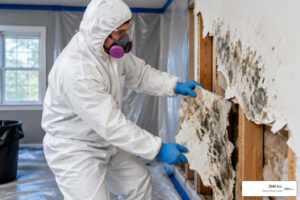
What Does Mold Abatement Actually Cost? Here’s the Quick Answer
The cost of mold abatement for most commercial and residential projects in 2026 falls within the following ranges:
| Project Size | Affected Area | Typical Cost Range |
|---|---|---|
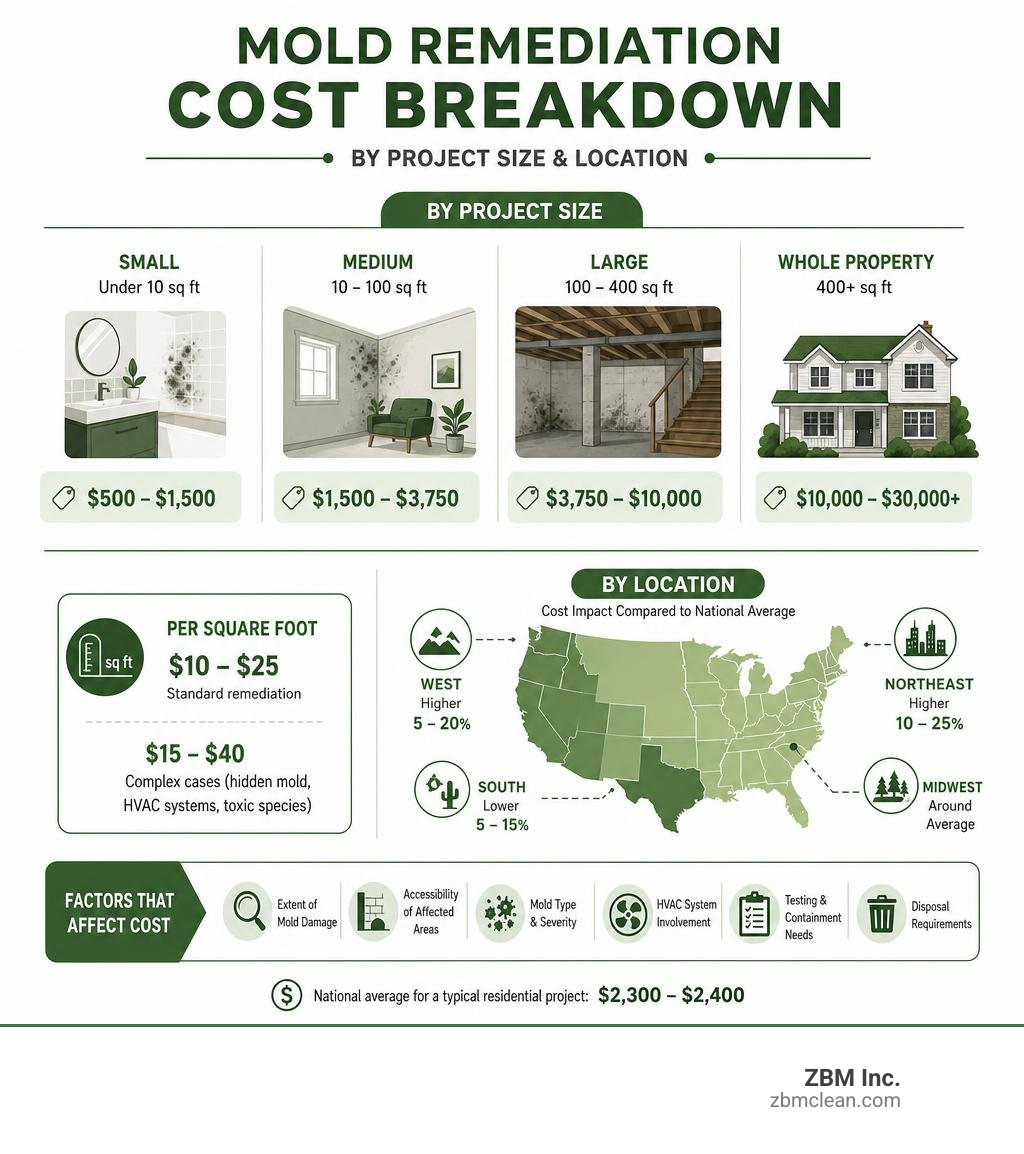
| Small | Under 10 sq ft | $500 – $1,500 |
| Medium | 10 – 100 sq ft | $1,500 – $3,750 |
| Large | 100 – 400 sq ft | $3,750 – $10,000 |
| Whole property | 400+ sq ft | $10,000 – $30,000+ |
Per square foot, most contractors charge $10 to $25 for standard mold remediation. Complex jobs involving hidden mold, HVAC systems, or toxic species like Stachybotrys can run $15 to $40 per square foot.
The national average sits around $2,300 to $2,400 for a typical residential project, though commercial jobs can reach $50,000 or more depending on scope.
You spotted something dark and fuzzy on a wall. Maybe there’s a musty smell you can’t quite place. Or perhaps an employee mentioned headaches and someone finally looked up at the ceiling tiles.
Whatever brought you here, one question is front of mind: how much is this going to cost?
The honest answer is — it depends. A small surface patch on a bathroom tile is a very different problem than mold spreading inside a crawl space, behind drywall, or through an HVAC system serving an entire building. The difference in price between those two scenarios can be tens of thousands of dollars.
This guide breaks down exactly what drives those costs, what you can expect to pay in 2026, and how to avoid the expensive mistakes that turn a manageable cleanup into a major project.
I’m Terry Zastrow, owner of ZBM, Inc. — an IICRC-certified firm with approximately 30 years of experience in mold abatement and restoration services for commercial properties, housing authorities, and municipalities. That field experience shapes everything I’ll share about the cost of mold abatement in this guide. Whether you’re managing a single commercial property or overseeing a portfolio of facilities, the pricing factors and decision points ahead apply directly to your situation.
Common cost of mold abatement vocab:
Average Cost of Mold Abatement in 2026
When calculating the overall cost of mold abatement, looking at national baselines gives us a helpful starting point. In 2026, the national average cost for professional mold remediation is $2,368, with most property owners spending between $1,223 and $3,753.
However, these figures can fluctuate based on economic shifts. Over the last five years, professional mold removal and remediation costs have climbed roughly 17.7% due to rising labor rates, fuel costs, and specialized equipment manufacturing expenses. What was a $1,869 job in 2022 has steadily adjusted to today’s average of $2,200 to $2,400 for standard residential projects.
Professional remediation companies typically price their services using a square footage model, ranging from $10 to $25 per square foot. If the mold is highly complex, hard to reach, or nested deep within wall cavities, that rate can easily climb to $15 to $30 (and sometimes up to $40) per square foot.
At the absolute starting line, the estimated raw cost to clean mold starts at $2.30 to $2.80 per square foot for basic surface scrubbing. However, true “abatement” involves much more than wiping down a wall—it includes structural drying, containment, air scrubbing, and material disposal, which is why the comprehensive square foot rate is higher.
Several critical variables will ultimately determine where your project lands on this pricing spectrum:
- The total square footage of the contaminated area.
- Accessibility (e.g., open living spaces vs. tight crawl spaces).
- The type of materials affected (porous drywall and carpeting vs. non-porous concrete or metal).
- The mold species and whether toxic strains require enhanced containment protocols.
Small vs. Medium vs. Whole-House Cost of Mold Abatement
The overall scope of your mold issue dictates the remediation strategy, equipment requirements, and labor hours. Projects are generally categorized into three main size tiers:
Small Projects (Under 10 Square Feet)
If you are dealing with a small patch of surface mold—perhaps around a leaky bathroom sink or a window sill—remediation costs typically range from $500 to $1,500. It is important to note that most professional remediation companies maintain a minimum service charge of $500 to $1,500. This minimum covers the fixed costs of dispatching a certified crew, setting up basic containment, and running commercial HEPA air scrubbers.
Medium Projects (10 to 100 Square Feet)
A medium-sized contamination project often spans a portion of a room, a small crawl space, or a section of a basement. Homeowners and commercial managers can expect to pay between $1,500 and $3,750 for these jobs. At this stage, professional containment barriers are mandatory to prevent spores from migrating to unaffected areas of the property.
Large & Whole-House Projects (100+ Square Feet)
When water damage goes unnoticed for weeks, mold can colonize entire levels of a building. Whole-property remediation projects commonly range from $10,000 to $30,000. In severe commercial scenarios, where mold has spread through multi-story buildings or municipal facilities, cleanup costs can easily reach $50,000 or more.
| Project Size | Affected Square Footage | Average Cost Range | Key Requirements |
|---|---|---|---|
| Small | < 10 sq. ft. | $500 – $1,500 | Minimum service fees, localized cleaning, basic PPE |
| Medium | 10 – 100 sq. ft. | $1,500 – $3,750 | Physical containment zones, negative air pressure, HEPA vacuuming |
| Large | 100 – 250 sq. ft. | $3,750 – $7,000 | Multi-room containment, extensive demolition of porous materials |
| Whole-House | 250+ sq. ft. | $10,000 – $30,000+ | Full-scale structural drying, multi-zone air scrubbing, reconstruction |
Cost of Mold Abatement by Location in the Home
Where the mold is growing inside a property dramatically influences the final bill. Difficult-to-reach spaces require more prep work, specialized safety gear, and intensive labor.
Attic Mold ($1,000 – $4,000)
Attic remediation is notoriously labor-intensive. Techs must navigate tight joists, work around delicate insulation, and deal with extreme seasonal temperatures. Attic mold is usually driven by roof leaks or poor soffit ventilation, which must be corrected to prevent the mold from returning.
Crawl Space Mold ($500 – $2,000)
Crawl spaces are cramped, damp, and highly susceptible to mold growth. Remediation involves cleaning the floor joists and subflooring. To keep mold away permanently, many property owners bundle this with crawl space encapsulation, which can add $3,000 to $8,000 to the overall project.
Basement Mold ($500 – $3,000)
Because basements are naturally prone to hydrostatic pressure and high humidity, they are prime real estate for mold. If the mold is limited to concrete walls, the cost remains on the lower end. If the basement is finished with drywall, framing, and carpeting, costs can climb quickly.
HVAC & Air Ducts ($2,000 – $10,000)
This is one of the most critical areas to address. If mold spores colonize your HVAC system, they will circulate through the entire building every time the system cycles on. Remediation requires specialized duct-cleaning equipment, containment, and system-wide sanitization.
Inside Walls ($1,000 – $20,000)
There is a scary truth about mold hiding inside your walls. What looks like a tiny, innocent spot of mold on your wallpaper is often just the tip of an iceberg. Behind the drywall, thousands of square feet of framing, insulation, and electrical conduits can be completely covered in fungal growth. Remediation requires opening up the walls, removing the contaminated drywall, treating the structural studs, and rebuilding the wall from scratch.
Bathroom Mold ($500 – $1,500)
Bathrooms suffer from high humidity and poor ventilation. Fortunately, because bathroom surfaces are often non-porous (like tile and porcelain), cleanup is usually straightforward unless the mold has seeped deep behind the shower surround or into the subfloor.
Key Factors and Regional Regulations Driving Mold Pricing
When a certified estimator walks through your property, they aren’t just looking at the mold itself. They are calculating several underlying variables that drive labor and material costs:
- Accessibility: Can our technicians walk right up to the mold, or do they need to crawl through a 24-inch crawl space? Tight spaces require slower, more careful work, which increases labor hours.
- Structural Damage: Mold digests organic materials like wood and paper. If a leak has been neglected for months, the wood framing may have rotted, requiring structural repairs alongside mold removal.
- Moisture Source Repair: Mold cannot grow without water. Fixing the root cause—whether that means repairing a leaky pipe ($150 – $350) or fixing a roof leak ($400 – $1,000)—is a mandatory first step.
- Material Complexity: Non-porous materials (metal, glass, concrete) can be cleaned and saved. Porous materials (drywall, carpet, insulation) must be cut out, bagged, and replaced.
Mold Inspection and Testing Costs
Should you pay for a mold inspection before jumping into remediation? In many cases, yes. A professional mold inspection typically costs between $200 and $600, while specialized mold testing (air or surface sampling) runs $250 to $500.

Here is how the testing process breaks down:
- Pre-Remediation Testing: If you can already see a massive patch of mold, you don’t necessarily need to pay for testing to confirm it’s there—you just need to remove it. However, testing is highly recommended if you smell a musty odor but cannot find the source, or if you need to document the mold for an insurance claim.
- Air Sampling: Technicians pull a set volume of air through a specialized cassette to count the concentration of airborne spores inside the building compared to the outdoor air.
- Surface Samples: Swab or tape-lift samples are sent to an independent lab to identify the specific genus of mold present.
- Post-Remediation Clearance Testing ($200 – $400): This is a crucial step. Once the cleanup is complete, an independent third party should test the air inside the containment zone to verify that spore levels have returned to normal background levels before the containment barriers are taken down.
Toxic Mold and Specialized Containment Surcharges
Not all molds are created equal. While the CDC recommends treating all indoor mold growth as a potential health hazard, certain species require far more stringent safety protocols.
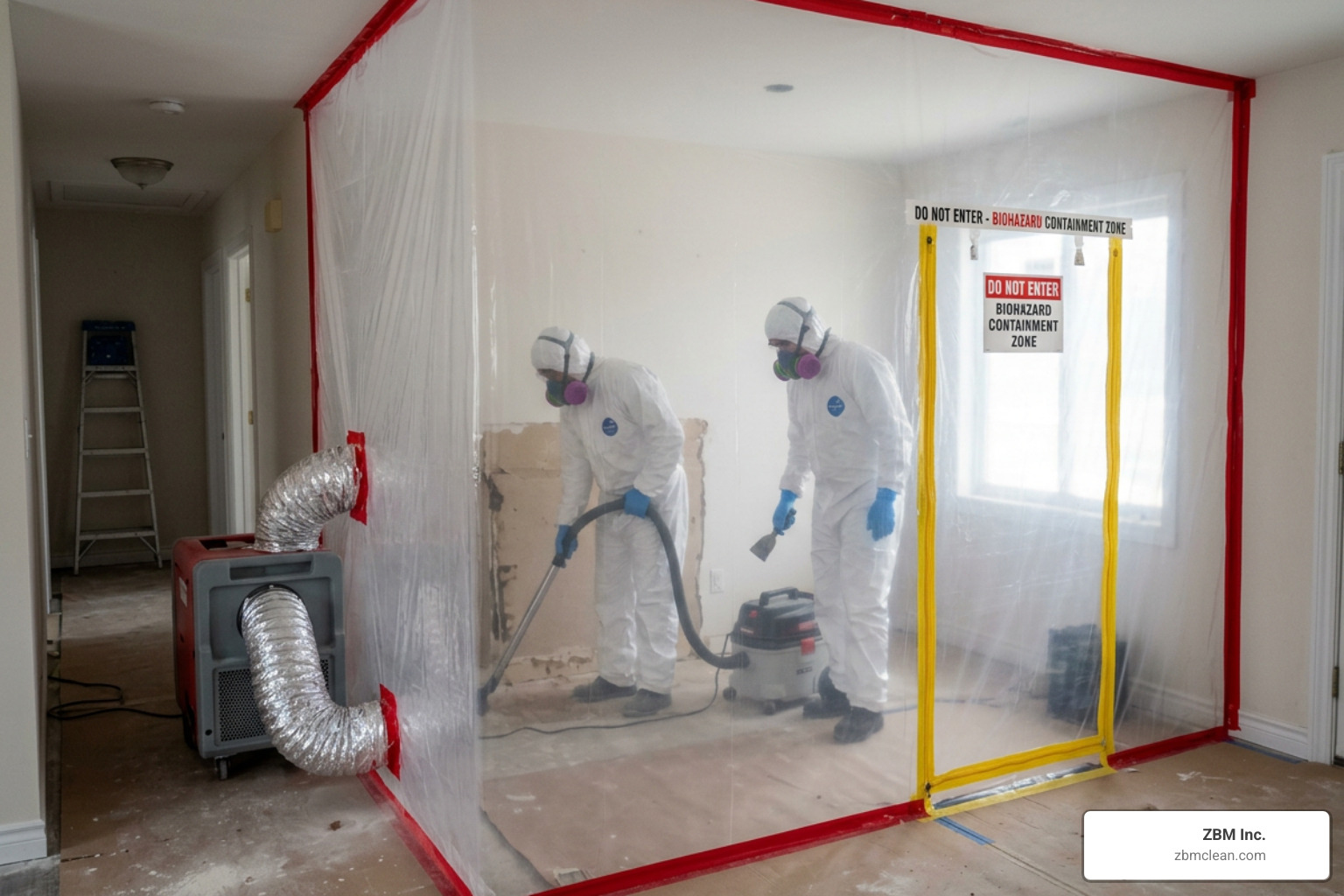
If lab testing reveals high concentrations of Stachybotrys chartarum (commonly known as toxic black mold), expect a 20% to 40% surcharge on your remediation estimate. This is because hazardous species trigger stricter Level 3 containment protocols:
- Stricter Containment Barriers: Heavy-duty plastic sheeting with airlocks must be installed to seal off the work zone entirely.
- Negative Air Pressure: Industrial HEPA air scrubbers must run continuously to exhaust filtered air outside, ensuring no spores escape into the rest of the building.
- Enhanced PPE Requirements: Technicians must wear full-body Tyvek suits, double gloves, and full-face respirators.
- Hazardous Waste Disposal: Contaminated materials must be bagged in double-strength hazardous waste bags and disposed of according to strict local regulations.
To understand why these steps are necessary, you can read more about the 5 types of toxic mold and why they require professional biohazard handling.
Regional Pricing Snapshots and Licensing Rules
Because ZBM Inc. serves Southeast Wisconsin, including Dodge County, Jefferson County, Watertown, Lake Mills, and up to the Northwoods (Minocqua), we operate within a specific regional economic climate.
In Wisconsin, the average cost of mold remediation sits around $2,068 per project, slightly below the national baseline. However, our local climate introduces unique challenges. Our region experiences hot, humid summers and freezing winters. This freeze-thaw cycle frequently leads to ice dams on roofs and frozen, burst pipes in crawl spaces—both of which are primary catalysts for hidden mold growth.
Unlike states like Florida, which have highly rigid state licensing boards under Chapter 468, Wisconsin does not have a state-mandated mold remediation license. However, this lack of state oversight makes it even more critical for local property owners to vet their contractors.
To protect your property, you should only work with firms that voluntarily hold industry-standard certifications. Our team at ZBM Inc. strictly follows the IICRC S520 standard—the gold standard for professional mold remediation. You can learn more about what to look for in our guide on mold remediation licensing.
DIY vs. Professional Remediation and Insurance Coverage
It is tempting to grab a bucket of bleach and try to tackle mold yourself to save a few dollars. However, before you start scrubbing, it is important to understand the guidelines, safety risks, and financial trade-offs.
When to Choose DIY vs. Professional Services
The Environmental Protection Agency (EPA) provides a clear rule of thumb: if the affected area is less than 10 square feet (about a 3-foot by 3-foot patch), you can generally handle it yourself.
If you choose the DIY route, keep these best practices in mind:
- Wear the Right Gear: Never scrub mold without an N-95 respirator, long rubber gloves, and protective goggles.
- Avoid Bleach on Porous Surfaces: Bleach is highly effective on non-porous surfaces like tile, but it cannot penetrate porous wood or drywall. It actually leaves water behind, which can feed the mold roots deep inside the material.
- Contain the Dust: Mist the area with water before scrubbing to prevent spores from becoming airborne.
If the mold covers more than 10 square feet, is located inside your HVAC system, or was caused by contaminated sewage water, you should always call professional mold remediation experts. Attempting to clean large areas without professional containment will scatter millions of spores throughout your indoor air, making the problem significantly worse and lowering your overall property value.
Furthermore, delicate items like sofas, mattresses, and antique wood tables require specialized care. If your valuables have been exposed, consult a specialist in furniture mold remediation to see if they can be safely restored.
Understanding Homeowners Insurance and Mold Coverage
Will your insurance company pay for mold remediation? The answer depends entirely on the source of the moisture.
Insurance policies typically view mold as a secondary result rather than an initial cause.
- Covered Perils: If a pipe suddenly bursts, or a washing machine hose ruptures, and you immediately call a restoration company, your insurance policy will likely cover both the water damage cleanup and any resulting mold remediation.
- Excluded Perils (Gradual Damage): If mold grew because of a slow, gradual roof leak that went unnoticed for two years, or because of high basement humidity, your insurance claim will almost certainly be denied. Insurers expect property owners to perform routine maintenance to catch these issues early.
- Policy Caps: Even if your claim is approved, many standard HO-3 policies have strict sub-limits or caps on mold coverage, often limiting payouts to $5,000 or $10,000.
Pro Tip: Document everything. The moment you spot water damage or mold, take clear photos and videos, note the date, and contact your insurance provider within 24 hours to file a claim.
Frequently Asked Questions About Mold Abatement
What is included in a professional mold remediation service?
A comprehensive, professional cleanup follows a structured 7-step process to ensure your indoor air quality is fully restored:
- Source Identification: Finding and fixing the water leak.
- Containment: Setting up physical plastic barriers and negative air pressure zones.
- Air Filtration: Running commercial HEPA air scrubbers to capture airborne spores.
- Demolition & Removal: Cutting out and safely bagging contaminated drywall, carpet, and insulation.
- Cleaning & Sanitization: Scrubbing remaining structural wood with antimicrobial solutions and HEPA-vacuuming all surfaces.
- Structural Drying: Using commercial dehumidifiers and air movers to bring wood moisture levels below 15-20%.
- Clearance Testing: Verifying the space is safe through independent air sampling.
To learn more about what to expect during this process, read our detailed overview of professional mold abatement services.
How can I minimize mold remediation costs?
The single best way to save money on mold cleanup is speed. Mold spores can establish a thriving colony within 24 to 48 hours of water exposure. If you experience a leak, dry the area completely within 24 hours. Additionally, keep your indoor humidity below 50% using dehumidifiers, clean your gutters regularly, and inspect your crawl space and attic at least twice a year.
How long does the mold remediation process take?
For a typical residential or light commercial project, the physical mold remediation process takes 1 to 5 days.
- Day 1: Containment setup and initial demolition.
- Days 2-3: Antimicrobial cleaning and structural drying.
- Day 4: Post-remediation clearance testing.
- Day 5: Containment tear-down.
If structural framing was damaged or extensive drywall was removed, the subsequent reconstruction phase can add an extra week or two to the total timeline.
Conclusion
Discovering mold in your home or commercial property can feel overwhelming, but understanding the cost of mold abatement helps you make smart, proactive decisions. By addressing leaks immediately, keeping indoor humidity low, and acting quickly at the first sign of a musty smell, you can keep remediation costs to a minimum.
At ZBM Inc., we are proud to be a licensed, bonded, insured, and family-owned cleaning and restoration firm. Based in Watertown, WI, we provide full-service residential and commercial cleaning, biohazard cleanup, and disaster recovery across Dodge County, Jefferson County, Lake Mills, Southeast Wisconsin, and up to the Northwoods.
If you suspect mold is compromising your property or your health, don’t wait for a small issue to turn into a major structural problem. Contact ZBM Inc. today for a professional assessment, and let our certified team restore your peace of mind. To learn more about the health implications of different fungal strains, explore our guide on the 5 types of toxic mold and biohazard cleanup.