How Mold Mitigation Services Protect Your Home
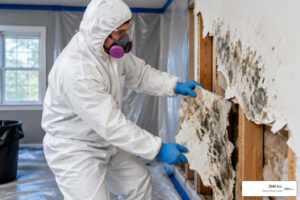
Mold mitigation services do more than wipe away visible growth. A qualified team finds and fixes the moisture source, contains the affected area, removes or cleans contaminated materials using appropriate methods, and helps prevent spores from spreading to clean parts of the home.
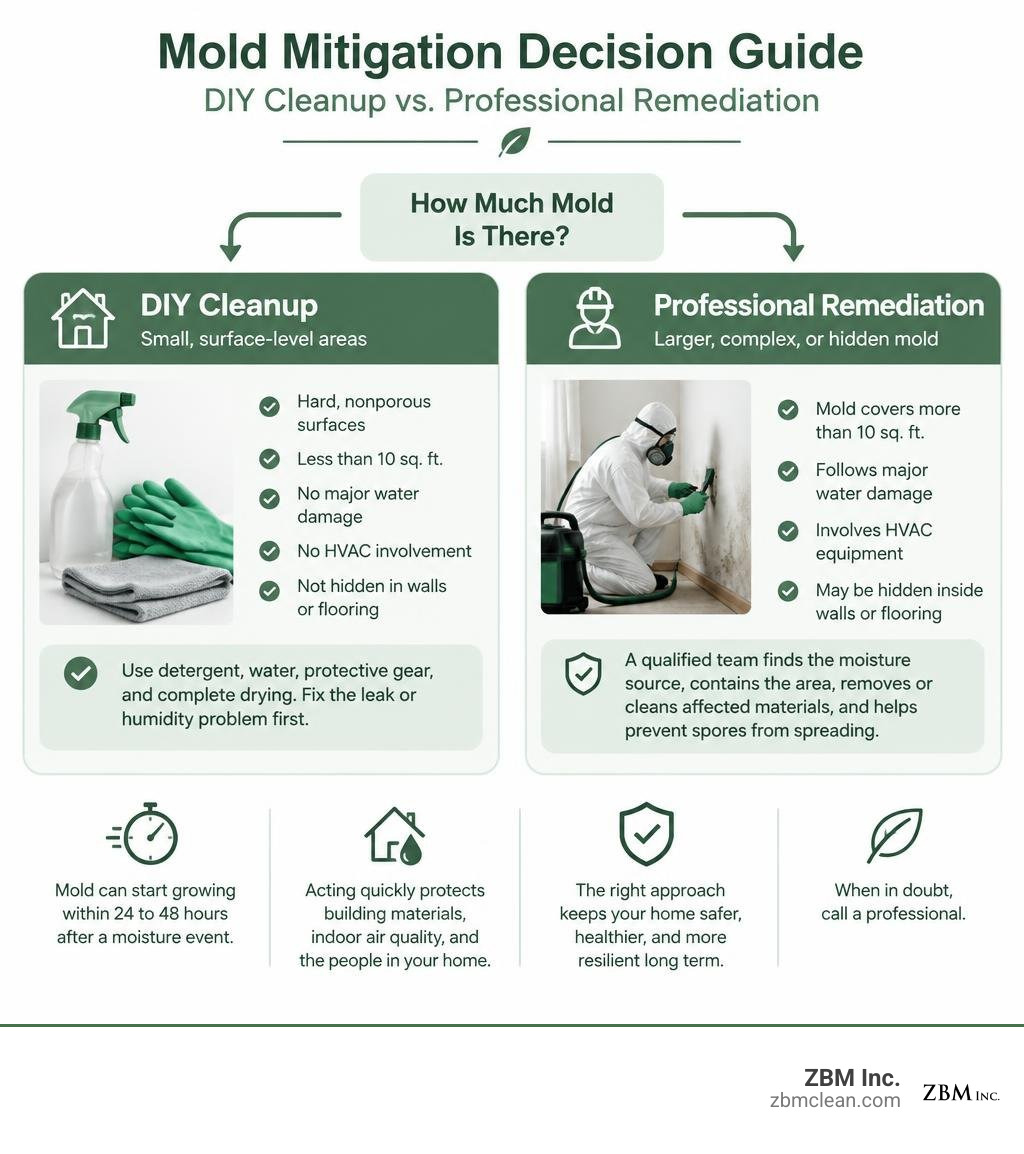
Hire a professional when mold covers more than about 10 square feet, follows major water damage, involves HVAC equipment, or may be hidden inside walls or flooring. Attempting to clean even small surface areas yourself can be time-consuming and may not fully resolve the underlying moisture problem, so professional assessment is the safest route.
Mold can begin growing within 24 to 48 hours after a moisture event. Acting quickly protects building materials, indoor air quality, and the people who spend time in the space.
I am Terry Zastrow, owner of ZBM Inc., a certified IICRC firm with roughly 30 years of experience delivering specialized cleaning, restoration, and mold mitigation services for public- and private-sector properties. My training and field experience help inform the practical steps in this guide, from safe containment through long-term moisture control.
Terms related to mold mitigation services:
Understanding Mold Mitigation Services and Remediation Standards
When dealing with fungal contamination in a residential or commercial setting, understanding standard industry protocols makes all the difference. Mold is not just an unsightly patch on a baseboard; it is an active biological organism that releases microscopic spores and volatile organic compounds into the indoor air. A simple wipe-down does not resolve an active moisture or fungal issue.
Elevated spore concentrations can compromise indoor air quality and threaten structural integrity. When organic framing, subflooring, or drywall remains damp, fungal roots compromise the cellulose structure of building materials, leading to rot and costly structural repairs.
| Feature | Basic Surface Cleaning | Comprehensive Professional Remediation |
|---|---|---|
| Moisture Source Identification | Rarely addressed | Advanced moisture meters and thermal imaging |
| Spore Containment | None (spores spread freely) | Critical barriers under negative air pressure |
| Air Filtration | Standard home vacuum (redistributes spores) | Industrial HEPA filtration (99.97% capture at 0.3 microns) |
| Porous Substrate Treatment | Surface only (hyphae remain) | Deep extraction, controlled removal, or antimicrobial sanding |
| Air Quality Verification | Visual check only | Post-remediation clearance testing |
Relying on local expert mold remediation and removal teams ensures every phase of the cleanup complies with established IICRC S520 guidelines, maintaining clean air and safe living spaces across Watertown, WI, Jefferson County, Dodge County, and Southeast Wisconsin communities.
Mold Removal vs. Professional Mold Remediation
Many property owners conflate simple mold removal with full mold remediation. Mold removal involves wiping away visible colonies from non-porous surfaces. While this temporarily eliminates the stain, it leaves behind the deeper fungal roots, known as hyphae, which embed themselves inside porous substrates like drywall, unsealed wood, and insulation.
Remediation, on the other hand, is an all-inclusive environmental process. It systematically eliminates the active microbial colony, extracts the airborne fungal burden, and removes the underlying moisture driver. Without resolving the underlying humidity or leak, surface wiping is merely a temporary cosmetic fix. Addressing hidden mold hiding inside walls requires specialized tools to detect wall cavity moisture before colonies spread unchecked throughout adjacent rooms.
Why DIY Cleanup Fails and When Mold Mitigation Services Are Essential
Attempting to handle extensive fungal growth without commercial equipment is often an exhausting, uphill battle. Homeowners quickly discover that household cleaners lack the penetration power needed to address complex microbial contamination. For example, common household bleach consists mostly of water; when applied to porous surfaces, the chlorine evaporates rapidly on the surface while the moisture soaks deeper into the material, nourishing the root structure instead of neutralizing it.
Disturbing dry mold colonies without isolation sends millions of microscopic spores into the airflow, settling into carpeting, furniture, and ventilation channels throughout the property. The standard threshold established by environmental guidelines indicates that when visible contamination exceeds 10 square feet (roughly a 3-foot by 3-foot section), self-cleanup is no longer safe or viable.
At this scale, hiring a team with proper licensing standards and industrial-grade personal protective equipment (PPE) becomes vital to prevent cross-contamination and ensure the safety of building occupants.
Step-by-Step Breakdown of the Mitigation Process
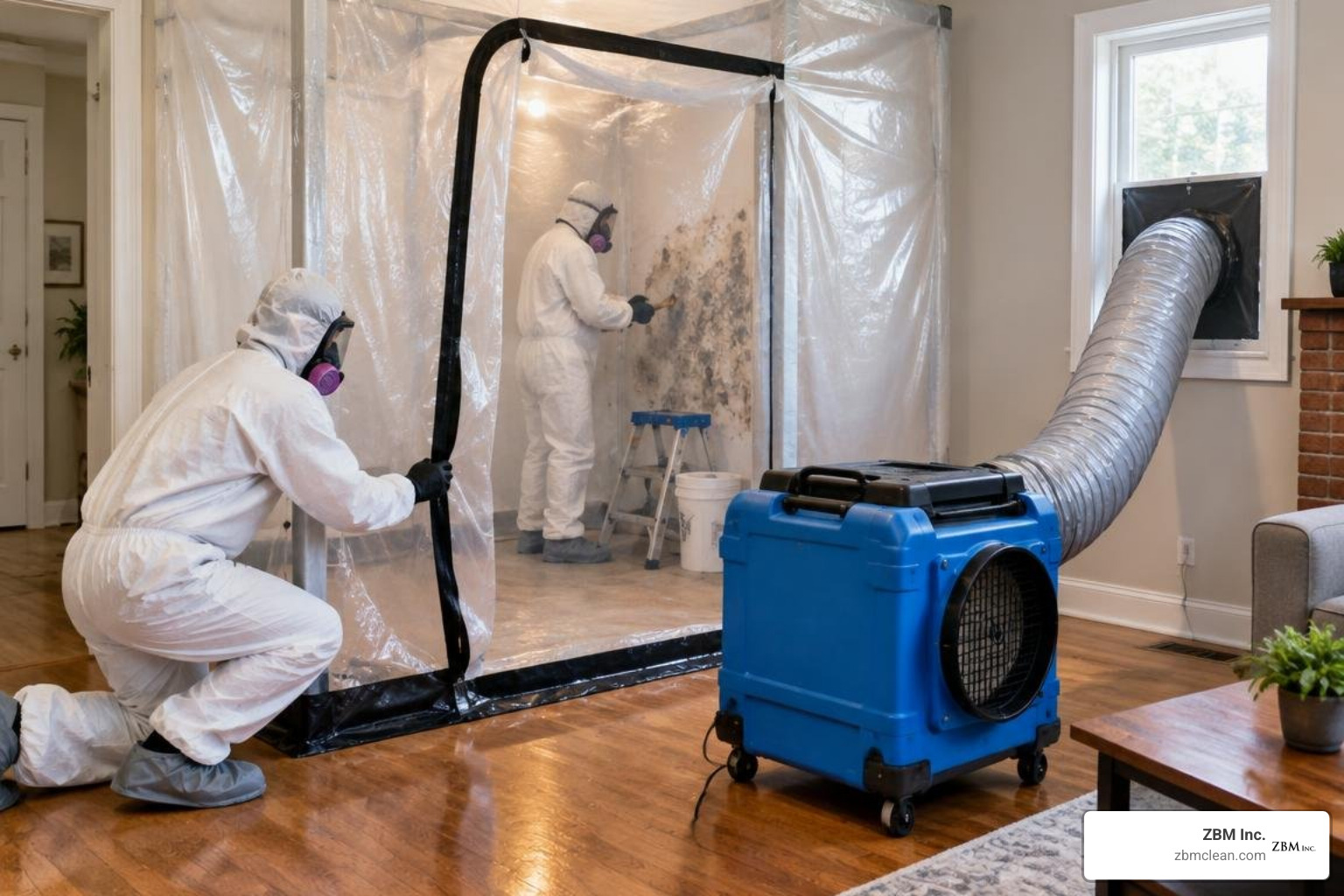
A structured remediation follows established industry protocols to return indoor spaces to safe, normal fungal ecology levels.
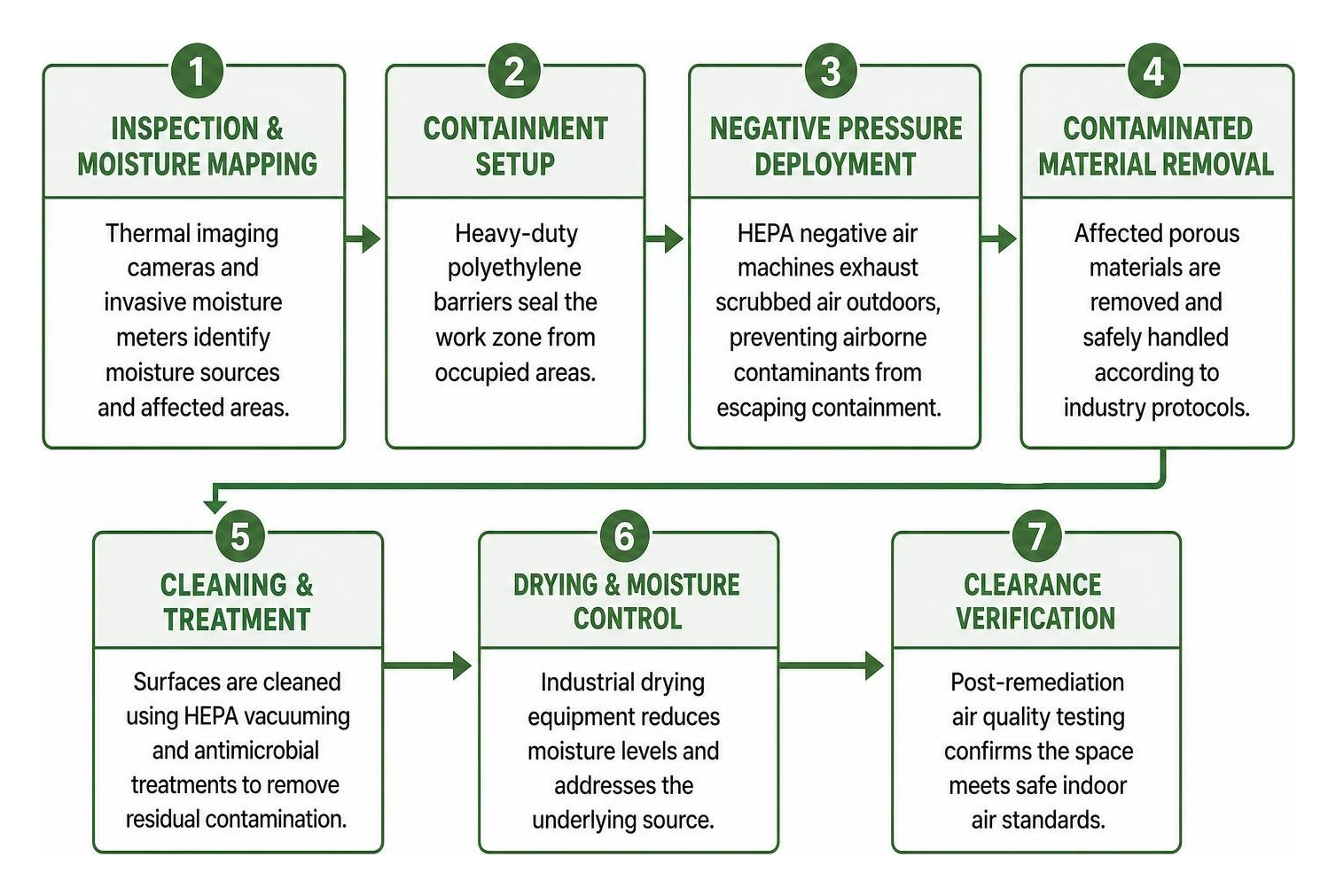
Following our step-by-step toxic mold cleanup guide ensures no phase of structural drying or spore containment is overlooked:
- Moisture Mapping & Inspection: Certified technicians use thermal imaging cameras and invasive moisture meters to determine the water migration pathway.
- Critical Containment Setup: Heavy-duty polyethylene barriers seal the work zone away from occupied areas of the home.
- HEPA Negative Pressure Deployment: Negative air machines continuously exhaust scrubbed air outdoors, ensuring no airborne contaminants escape containment.
- Controlled Demolition & Disposal: Unsavageable, porous structural elements are bagged, sealed, and removed under containment.
- Microbial Decontamination & HEPA Vacuuming: Structural framing undergoes intensive HEPA vacuuming, mechanical abrasion, and broad-spectrum antimicrobial washing.
- Air Scrubbing & Structural Drying: Dehumidifiers and air scrubbers run continuously to achieve target moisture content.
- Post-Remediation Verification (PRV): Independent environmental testing verifies airborne spore counts match or beat outdoor baseline levels.
Containment, Negative Pressure, and Air Filtration
Containment protocols are the backbone of environmental restoration. Technicians install 6-mil polyethylene plastic sheeting across doorways, archways, and HVAC registers to isolate the remediation zone completely.
Negative air machines equipped with true HEPA filters create a vacuum effect inside the containment envelope. When a door or zippered flap is opened, air rushes into the containment area rather than blowing out into clean living spaces. If mold spores enter the central heating and cooling distribution lines, specialized HVAC air duct mold removal is required to clean the interior duct linings and mechanical components before the system can be safely reactivated.
Mycotoxin Decontamination and Hidden Mold Extraction
Certain mold species, including Stachybotrys chartarum and Aspergillus, produce secondary chemical metabolites known as mycotoxins. These microscopic toxins cling to dust particles, textiles, and building components long after the living mold organism has been neutralized.
Removing mycotoxins requires advanced enzymatic cleaners, specialized surfactant solutions, and broad-spectrum treatments capable of breaking down these toxic chemical chains. When dealing with framing members, treating mold on structural wood requires physical contact methods, such as media blasting or direct antimicrobial sanding, followed by an institutional-grade fungicidal wash. This deep-cleaning protocol extracts embedded contaminants from porous grains and prevents dormant fungal networks from reactivating.
Costs, Timelines, and Tax Exemptions for Property Owners
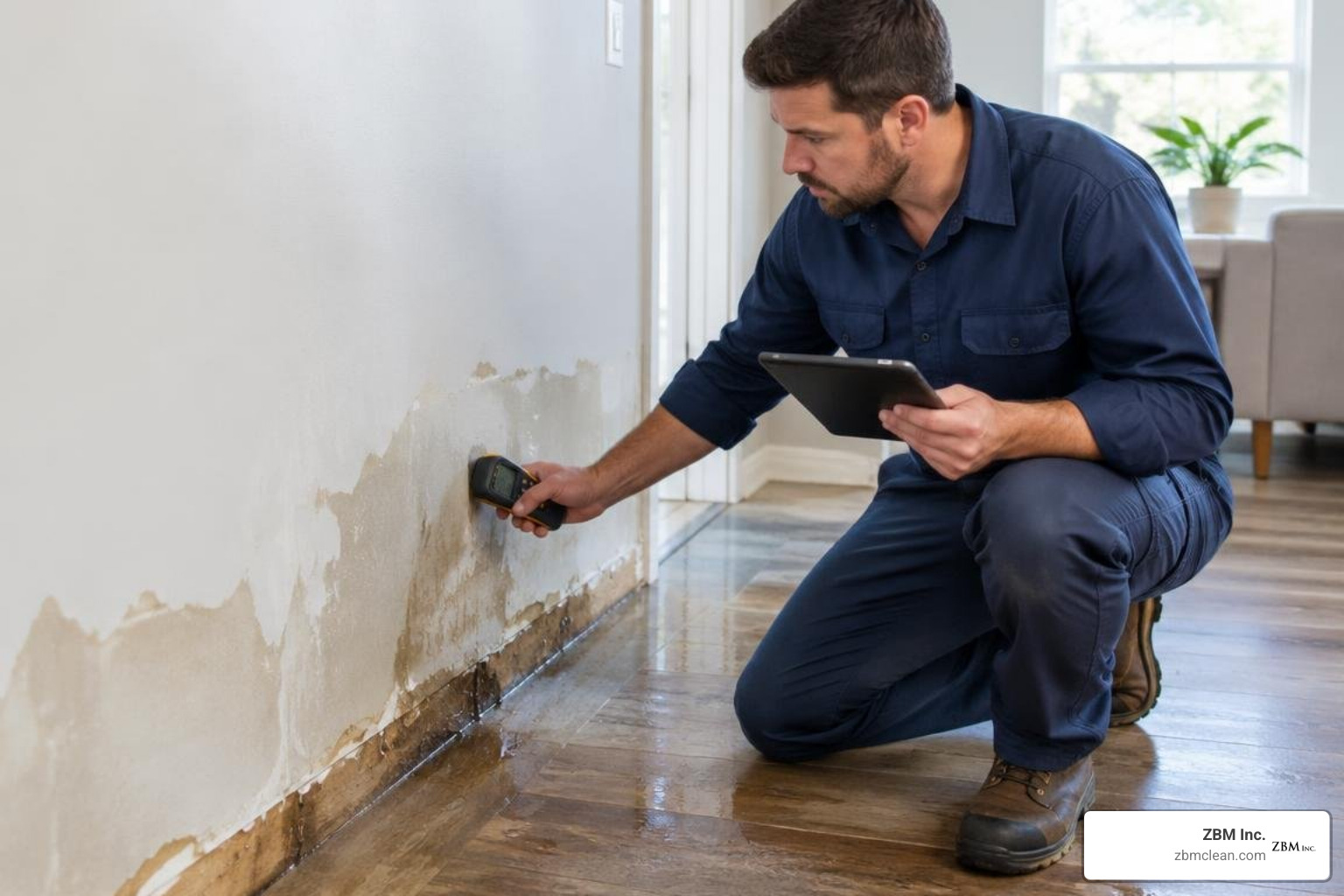
Understanding the financial and operational scope of remediation helps property managers and homeowners plan effectively. Project costs depend directly on square footage, accessibility of the moisture intrusion, spore concentration, and required structural demolition.
For broader perspective on remediation standards, reviewing established industry resources such as the EPA mold remediation guidelines gives insight into how moisture management and environmental factors impact service requirements.
Estimating Investment and Timelines for Mold Mitigation Services
The overall cost of an environmental mitigation project depends on multiple variables:
- Containment Scale: The number of isolation barriers, air scrubbers, and negative air setups required.
- Structural Demolition: Drywall removal, subfloor extraction, or cabinetry dismantling.
- Decontamination Level: Enzyme treatments for mycotoxin eradication versus standard antimicrobial wiping.
- Air Quality Clearance Testing: Third-party laboratory analysis to certify normal fungal ecology.
For a comprehensive review of pricing tiers and square-foot rates, check our detailed mold remediation cost breakdown.
A typical residential mold mitigation project takes between 2 and 5 business days. Minor, contained bathroom remediations may conclude in 48 hours, whereas widespread basement flooding requiring structural timber drying and rebuild preparation can take up to a week.
Disaster Area Tax Relief and Exemption Rules
When mold outbreaks result from officially declared natural disasters or severe regional flood events, property owners may qualify for specific sales tax exemptions on labor charges.
Tax regulations distinguish between materials and remediation labor:
- Labor Exemptions: In declared disaster zones, pure labor charges for water extraction, demolition, and microbial decontamination are frequently exempt from sales tax if billed as separate line items.
- Separated Invoicing: To claim disaster-related tax exemptions, invoices must clearly itemize equipment rental, chemical consumables, and direct labor. Lump-sum invoicing can invalidate exemptions if taxable material costs exceed state-mandated thresholds.
- Materials and Consumables: Antimicrobial washes, plastic containment sheeting, and structural replacement materials remain subject to standard state sales taxes.
Property owners should request itemized statements from their mitigation contractor to present to their tax professional or insurance adjuster.
Residential vs. Commercial Mold Protocols and Safety Measures
While the biological nature of mold remains identical in any structure, the operational execution of residential versus commercial remediation differs significantly. Commercial projects involve higher air volumes, complex multi-zone HVAC configurations, strict regulatory compliance, and the need to minimize operational downtime for tenants and employees.
Commercial facilities require phased engineering controls to stop airborne spore spread across adjacent business suites, maintaining continuous air filtration and uninterrupted business operations.
Safety Precautions and Occupant Relocation Guidelines
During structural remediation, the physical disturbance of fungal colonies causes spore counts within the containment zone to rise significantly before air scrubbers capture them. For this reason, vulnerable individuals—including infants, the elderly, asthma sufferers, and immunocompromised individuals—should temporarily relocate away from active remediation zones.
If containment can be maintained with sealed entryways and direct negative-air exhaust out of windows, occupants can often remain in unaffected sections of the home. However, when remediation involves primary living areas, kitchens, central HVAC systems, or extensive flooring removal, vacating the property for 48 to 72 hours is the safest choice.
Long-Term Prevention and Moisture Control Strategies
Remediation solves existing contamination, but long-term moisture management prevents future fungal growth:
- Maintain Relative Indoor Humidity: Keep indoor humidity between 30% and 50% year-round using high-capacity dehumidifiers in basements and crawl spaces.
- Ensure Proper Ventilation: Run exhaust fans in kitchens and bathrooms during use and for at least 20 minutes afterward.
- Grade Exterior Drainage: Ensure exterior soil slopes away from foundation walls and downspouts discharge rainwater at least 6 feet from the structure.
- Inspect Plumbing Fixtures: Routinely check supply lines under sinks, water heaters, and washing machine hoses for minor weeping.
- Apply Surface Sealants: Treat high-humidity substrates with commercial-grade mold-resistant protective coatings to prevent spores from penetrating structural framing.
Frequently Asked Questions About Mold Remediation
Can you safely stay inside the house during mold remediation?
Occupants can generally stay inside if the remediation is isolated to a single room (such as a guest bathroom) and sealed behind plastic containment under continuous negative pressure. However, if the work involves main living spaces, heating and cooling air ducts, or if household members suffer from respiratory vulnerabilities, temporarily relocating during the demolition and cleaning phases is strongly advised.
Why does using bleach on porous materials worsen mold growth?
Bleach is formulated with roughly 90% water and a weak concentration of chlorine. When applied to porous materials like drywall or raw timber, the chlorine molecules evaporate on the surface, while the remaining water soaks directly into the material. This provides a fresh moisture source for the root hyphae, causing the colony to rebound and release defensive spores and mycotoxins.
How long does a standard mold mitigation project take from start to finish?
A standard residential remediation project typically takes 2 to 5 days. The timeline includes initial containment setup, selective demolition of damaged materials, antimicrobial deep cleaning, 24 to 48 hours of structural dehumidification, and final post-remediation air clearance testing.
Conclusion
Lingering moisture problems require prompt, professional attention before small fungal colonies become widespread structural concerns. Successfully managing indoor mold requires finding the original moisture source, setting up proper containment, utilizing HEPA air filtration, and removing contaminated materials safely.
When facing stubborn indoor contamination, working with a reputable team of professional mold remediation experts guarantees that every spore and mycotoxin is thoroughly addressed. At ZBM Inc., we are a licensed, bonded, insured, and family-owned provider with certified professionals serving Watertown, WI, Jefferson County, Dodge County, Minocqua, Lake Mills, and communities across Southeast Wisconsin and the Northwoods. We bring the specialized equipment and technical training needed to restore healthy indoor air to your property.
If you suspect hidden fungal growth or need help identifying five dangerous toxic mold varieties in your property, contact our certified team today for a comprehensive moisture assessment and remediation plan.